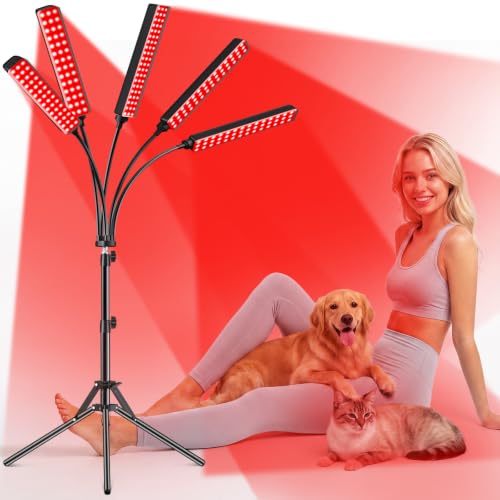

You have been researching red light therapy for months. Every article promises younger skin, faster recovery, and better sleep. But when you search for the best red light therapy panel for home use, you find dozens of options with confusing specs and mixed reviews. You need a clear, honest guide that cuts through the noise.
This review covers six top-rated panels, from budget-friendly pads to powerful full-body units. We evaluate each one on build quality, light output, versatility, and ease of use. Whether you are new to red light therapy or upgrading your setup, this guide helps you find the perfect match for your home wellness routine. For more targeted options, check out our best red light therapy belts guide.


Buying Guide
Wavelength and Light Output
Wavelength determines how deeply light penetrates your skin and tissues. For home use, the most common and effective wavelengths are 660nm (red) for surface skin benefits and 850nm (near-infrared) for deeper muscle and joint support. Some panels also include 940nm for even deeper penetration. Look for a panel that offers both red and near-infrared light, ideally with independent controls so you can customize each session. Irradiance, measured in mW/cm², indicates how much light energy reaches your skin. Higher irradiance means shorter sessions. For example, the BestQool panel delivers 95.6 mW/cm² at 3 inches, while the Hooga HG300 provides over 73 mW/cm² at 6 inches.
Panel Size and Coverage
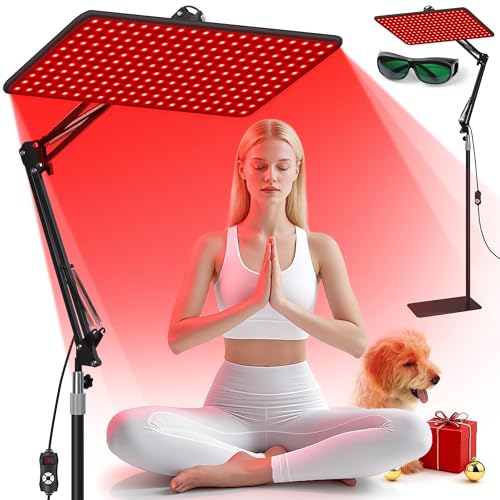
Panel size directly affects how much of your body you can treat in one session. Large panels, like the Morfone model at 16 x 8 inches, cover your entire face, back, or chest in a single session. Smaller panels, such as the Hooga HG300, are better for targeted areas like a knee, elbow, or small section of the face. If you plan to use the panel for full-body therapy, choose a larger panel or one with an adjustable stand that lets you position it at different angles. For face-only use, a compact panel or a red light therapy wand for face may be more convenient.
Build Quality and Adjustability
A red light therapy panel is an investment. You want a device that feels solid, is easy to position, and will last for years. Look for panels with an adjustable stand that allows 180-degree rotation and height changes. Aviation-grade aluminum stands are lightweight yet sturdy. Some panels come with a U-shaped stand for tabletop use, while others include wall-mounting kits. The best panels also have active cooling systems to prevent overheating during longer sessions. Touchscreen controls and built-in timers add convenience. For body use, consider panels with detachable designs that can be used with an elastic strap, like the INTEO model.
Versatility and Modes
Not all red light therapy panels are created equal. Some offer only one mode, while others provide multiple light combinations and pulse settings. Pulse modes at 10Hz or 40Hz can enhance cellular response and reduce session time. Look for panels with at least three modes: red light only, near-infrared only, and a combined mode. Some advanced models, like the Morfone, have five modes that intelligently balance visible and invisible light for more comfortable sessions. If you plan to use the panel for both face and body, versatility is key. For body-specific needs, see our best red light therapy wand for body recommendations.
Final Thoughts
After evaluating six of the best red light therapy panels for home use, we recommend the BestQool Red Light Therapy Panel for its high power output, dual-wavelength flexibility, and durable build, making it ideal for users who want efficient full-body sessions. For those on a budget or seeking a portable option for targeted relief, the bonodave Red Light Therapy Pad for Body Back Knee offers an affordable, wrap-style design that works well for joints and smaller areas. Choose based on your space, treatment goals, and how much time you want to spend per session.
Related Guides
- Best Quality Red Light Therapy Panel
- Best At-Home LED Masks for Radiant Skin
- Best Red Light Therapy Mask for Rosacea
Frequently Asked Questions
How long should I use a red light therapy panel each day?
Most manufacturers recommend 10 to 30 minutes per session, 3 to 7 times per week. Start with shorter sessions and increase as your skin adapts. Always follow the specific guidelines in your device manual. For best results, consistency matters more than session length.
Can I use a red light therapy panel on my face and body?
Yes, most panels are designed for both face and body use. Larger panels cover more surface area, making them suitable for back, chest, and legs. For the face, some users prefer a dedicated FDA-approved red light therapy wand for precise targeting. Always use the included protective eyewear to shield your eyes from bright red and infrared light.
Do red light therapy panels hurt or cause burns?
No, red light therapy is non-invasive and painless. You may feel a slight warmth, but the panels are designed to stay cool during use. The therapy uses low-level light energy, not heat, so burns are not a concern. If you experience discomfort, reduce session time or increase distance from the panel.
What is the difference between 660nm and 850nm light?
660nm red light is visible and penetrates the skin’s surface to support collagen production, reduce inflammation, and improve skin tone. 850nm near-infrared light is invisible and penetrates deeper into muscles and joints to aid recovery and reduce pain. Most home panels combine both wavelengths for comprehensive benefits. For more details, explore our LED face masks category.